Home Interior Design Cost Explained: How It Is Calculated
By Archosphere | Interior Design Experts
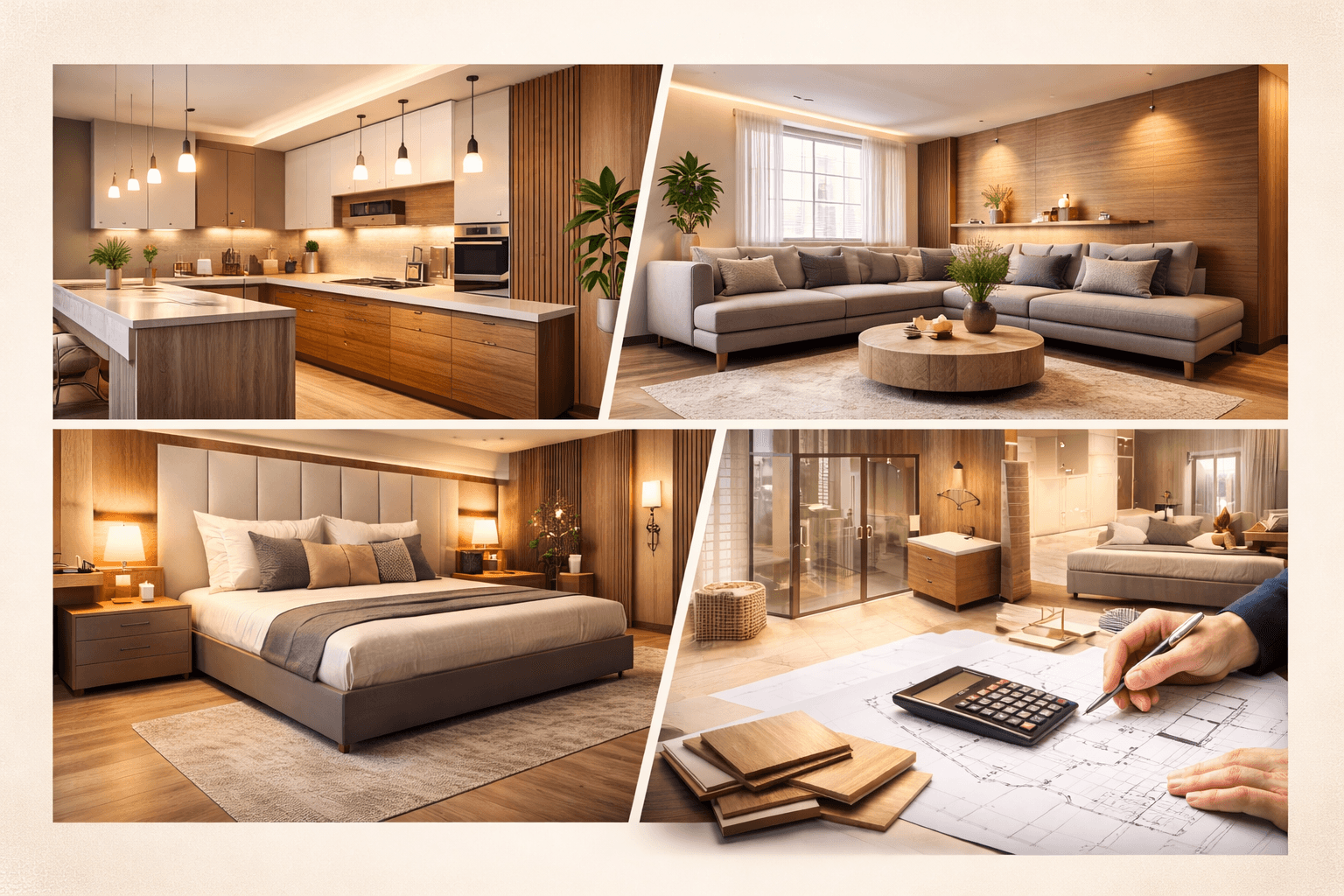
When planning your home interiors, the most common question is not “How much will it cost?” but rather “How is the cost calculated?”
At Archosphere, we believe transparency builds trust. Instead of fixed numbers, interior design budgeting is calculated based on scope, size, materials, and customisation level.
Let’s understand how the calculation actually works.
1. Step One: Understanding Scope of Work
Interior cost calculation always begins with scope.
Ask yourself:
Are you designing only the kitchen?
Only wardrobes?
Or full home interiors?
Are false ceilings included?
Is electrical work part of the project?
Are bathrooms being renovated?
The more spaces and elements included, the higher the total cost.
Simply put:
More work scope = More materials + More labour + More time
2. Step Two: Apartment Size & Layout
Size directly impacts calculation.
Cost is influenced by:
Number of bedrooms
Size of kitchen
Living & dining area dimensions
Number of bathrooms
Balcony or utility areas
Larger homes require:
More plywood
More laminate
More hardware
More labour hours
This is why a 3BHK costs more than a 1BHK — not just because of area, but because of number of units required.
3. Step Three: Number of Interior Units
Interior design is calculated unit-wise.
Each of these is considered a unit:
Kitchen cabinets (base + wall units)
Tall units
Wardrobes
TV units
Crockery units
Study tables
Vanity units
More units = Higher overall project cost.
For example:
A simple wardrobe costs less than a wardrobe with lofts, drawers, mirrors, and internal organisers.
A basic kitchen costs less than one with pullouts, tall pantry units, and corner mechanisms.
4. Step Four: Material Selection
Material choice plays a major role in calculation.
Wood & Core Materials
Commercial plywood
BWP plywood
MDF
HDHMR
Each has a different durability and price point.
Shutter Finishes
Laminate
Acrylic
Membrane
PU paint
Premium finishes increase material and labour costs.
Hardware
Hinges
Channels
Soft-close mechanisms
Drawer systems
Lift-up fittings
Better hardware = Longer life + Higher cost.
5. Step Five: Design Complexity
Cost increases when:
There are curved designs
Multi-level false ceilings are used
Custom lighting layouts are added
Fluted panels or wall panelling is included
Special textures or wall finishes are selected
Simple straight-line designs are always more economical than intricate custom designs.
6. Step Six: Labour & Execution Charges
Interior design is not only materials — skilled labour plays a huge role.
Cost depends on:
Carpenter charges
Electrician work
Painter charges
POP/false ceiling installation
Tile laying work
Labour rates vary city to city.
7. Step Seven: Location Factor
City impacts calculation because of:
Labour availability
Transport costs
Local material sourcing
Climate-specific materials
For example:
Coastal cities may require moisture-resistant plywood.
Compact metro apartments may need more customised storage.
8. Step Eight: Customisation Level
There are three broad calculation categories:
Basic Interiors
Essential storage
Standard laminate finishes
Minimal customisation
Mid-Level Interiors
Better hardware
Some design detailing
Feature walls
Premium Interiors
Customised furniture
Advanced lighting
Decorative ceilings
Designer finishes
The more personalised your home is, the more calculation shifts upward due to design effort and detailing.
9. Room-by-Room Calculation Method
Interior budgets are often calculated room-wise.
Kitchen
Calculated based on:
Running feet of cabinets
Type of finish
Accessories included
Bedrooms
Calculated based on:
Wardrobe size
Internal organisers
Extra furniture
Living Room
Calculated based on:
TV unit size
Wall panelling
Lighting design
Bathrooms
Calculated based on:
Tile area
Vanity type
Glass partitions
Plumbing changes
10. How Archosphere Calculates Your Interior Budget
At Archosphere, our calculation process includes:
Understanding your lifestyle needs
Measuring your site precisely
Creating a layout plan
Listing all required units
Selecting materials
Finalising design detailing
Preparing a transparent BOQ (Bill of Quantities)
This ensures:
No hidden surprises
Clear scope definition
Structured planning
Controlled execution
Why Knowing the Calculation Process Matters
When you understand how interior cost is calculated:
You make smarter material choices
You prioritise important areas
You avoid unnecessary upgrades
You stay within realistic expectations
Interior design is not about random numbers.
It is about structured planning.
Want to See Real Interior Projects?
Explore our completed designs in the Archosphere Gallery:
Final Thought
Interior budgeting is not about restriction — it is about clarity.
The right calculation approach helps you:
Invest where it matters
Save where it’s practical
Build a home that balances beauty and functionality
Planning your home interiors?
Schedule a consultation with Archosphere and let us help you create a realistic, well-calculated interior plan tailored to your space.